
Why Marine Plywood Is Ideal for Modular Kitchens
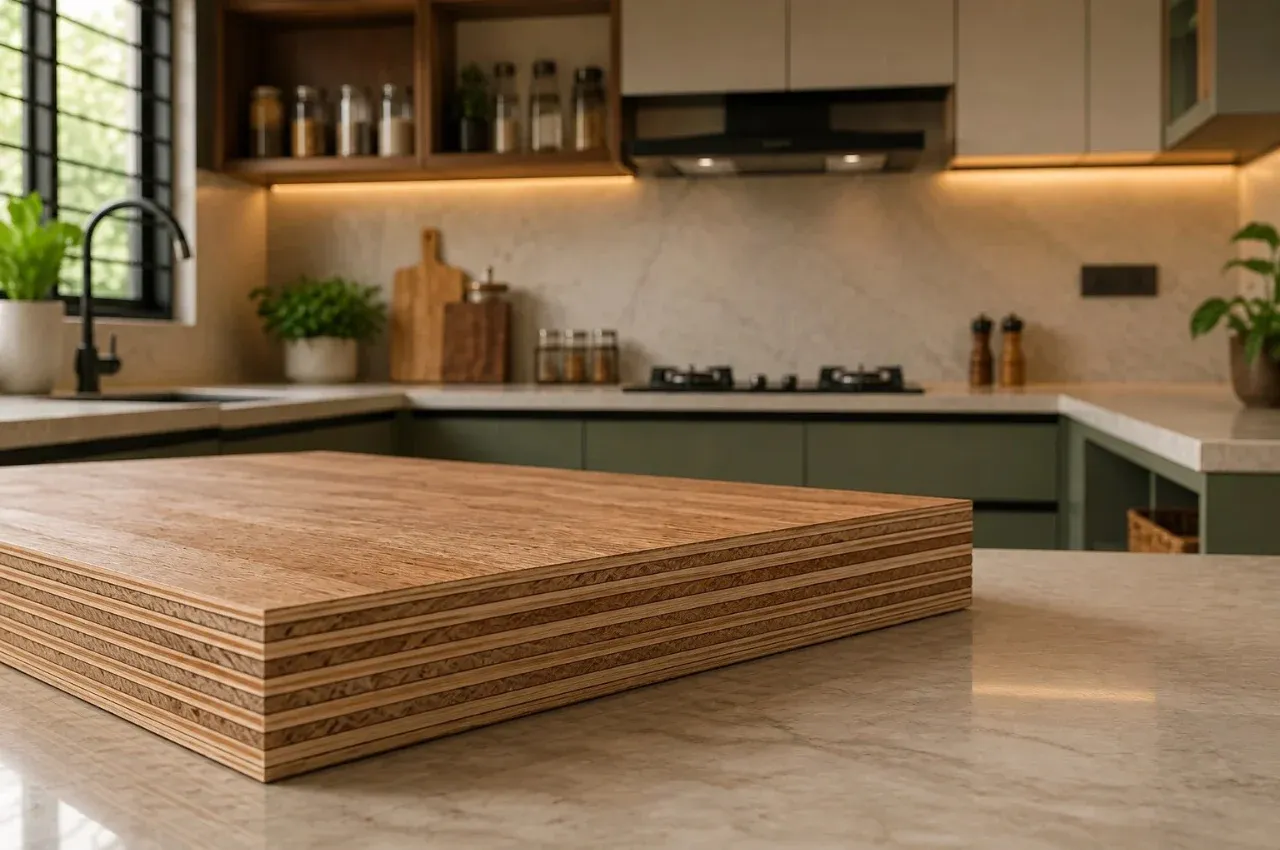
A modular kitchen is one of the most used spaces in any home. It deals with water, steam, heat, and constant handling every single day, often for years without any real break. For this reason, the material used to build kitchen cabinets, shutters, and shelves matters far more than most homeowners realise when they first sit down to plan a renovation.
Among the many options available, marine plywood has become the preferred choice for professionals who understand what it takes to build a kitchen that performs well for years rather than just looking good on the day of handover. Its exceptional durability, moisture resistance, and long-term performance make it an ideal material for kitchens that are expected to withstand daily use while maintaining both structural integrity and appearance.
What Is Marine Plywood?
The construction method of marine plywood imparts its strength through a specific process. Its strength comes from the way it is constructed. Manufacturers stack hardwood veneers on top of each other and bond them with phenol-formaldehyde resin under high pressure and heat, resulting in a board that holds together far better than most people realise until they see it cut open and examine the cross-section for themselves. Core gaps, which weaken ordinary plywood over time and allow moisture to creep in unnoticed, are kept to a minimum throughout this process.
A sheet cannot legitimately call itself marine plywood unless it carries IS 710 certification, since this standard exists specifically for boiling-water-proof performance, which is why the trade often shortens it to BWP grade in everyday conversation. Beyond the resin itself, many manufacturers add a chemical treatment, such as copper, chrome, or boron, protecting the board against fungus, termites, and borer insects that would otherwise work their way through untreated timber over the years.
Why Material Selection Matters in Modular Kitchens
Choosing the right plywood grade is not a minor detail. It determines how long cabinets will last, how well they resist warping, and how much maintenance a kitchen will eventually require. Kerala's climate, with its high humidity and heavy monsoon months, places extra stress on interior materials.
A kitchen built with an inferior grade of plywood may look fine for the first year or two, then begin to show swelling, delamination, or fungal growth around the sink and stove areas. Interior designers in Kerala who work on modular kitchens routinely see this pattern in homes where lower-grade plywood was used to cut costs upfront.
Benefits of Marine Plywood for Modular Kitchens
Marine plywood brings together strength, water resistance, and finish quality in a single material, which is why it remains the top choice for kitchen construction. Every layer is bonded under high pressure with waterproof resin, giving the board a level of consistency that ordinary plywood cannot match. Here’s why this material continues to outperform standard grades in daily kitchen use.
- Superior Moisture Resistance for Kitchen Environments: Resists water absorption effectively, preventing cabinets from swelling, warping, or losing shape even with frequent spills, steam, and regular cleaning near the sink.
- High Strength and Load-Bearing Capacity: Offers high load-bearing capacity due to its dense veneer construction, allowing it to support heavy countertops, appliances, and fully stocked shelves without sagging.
- Protection Against Termites and Borer Insects: Protects against termites and borer insects through chemical treatment, an important advantage in humid coastal regions where untreated wood deteriorates quickly.
- Strong Screw and Hardware Holding Ability: Holds screws and hinges firmly over time, reducing loosening, rattling, and misalignment seen in cabinets built with weaker plywood grades.
- Versatile Finishing Options for Interior Designs: Accepts laminates, veneers, and paint finishes evenly, giving designers the freedom to match any interior theme without compromising structural performance or durability.
Where Marine Plywood Can Be Used in a Modular Kitchen
Not every part of a kitchen requires the same grade of plywood, and using marine ply strategically helps balance performance with budget. The sink base cabinet is the most critical zone, as it deals with constant water exposure and occasional leaks. Areas below the stove, cabinets near the dishwasher, and countertops also benefit significantly from marine-grade material. Base units in general, being closer to the floor and more exposed to spills, are best built in marine plywood. Overhead cabinets in drier zones can sometimes use a slightly lower grade, though many designers still prefer marine ply throughout for consistency and peace of mind.
Marine Plywood vs Regular Plywood
Regular plywood, the kind most commonly sold for general furniture, relies on a lower proportion of resin and was never really meant to survive constant water contact. It performs adequately in dry cabinets and shelving units placed away from moisture, but a kitchen puts a different kind of pressure on a board, and this is where regular plywood tends to struggle. Steam from cooking, water splashed near the sink, and general daily spills all work against boards that were only rated for interior use.
Marine plywood follows a stricter path from the start. The veneers used are of a higher grade, core gaps are far fewer, and every single layer is bonded with waterproof resin rather than just the outer sheets. The practical difference shows up over time rather than immediately. A kitchen built with regular plywood may begin swelling or separating at the layers within just a couple of years, while a properly sealed marine plywood board tends to hold its shape and strength well past the ten-year mark, often much longer.
Is Marine Plywood Worth the Investment?
Cost is usually the first objection homeowners raise, and it is a fair one, since marine plywood does sit above standard grades on price. Looking only at the initial invoice, though, misses the larger picture. Fewer repairs, fewer replacements, and far less ongoing maintenance tend to offset that upfront difference within a few years of regular use. A kitchen renovation is rarely a quick or inexpensive undertaking, which is exactly why choosing a board that lasts matters as much as it does. For a family expecting their kitchen to last well beyond a decade, marine plywood reads less like an added expense and more like a decision that pays for itself over time.
Tips for Choosing Quality Marine Plywood
Plywood labelled as marine grade in the market does not always meet the actual standard, so buyers need to verify this themselves rather than trust the label alone. A supplier's word is not enough. Physical checks and documentation together tell the real story of what you are purchasing.
- Check for ISI Certification: Look for ISI certification under IS 710 on the sheet or invoice. This is the only mark that confirms genuine boiling water resistance in India.
- Inspect the Edges: Run a hand along the sheet edges. Layers should sit tight against each other, since visible gaps almost always mean poor bonding underneath.
- Ask About the Resin: Ask the dealer directly what resin has gone into the board. Genuine phenol formaldehyde behaves very differently over time compared to diluted alternatives.
- Choose an Established Brand: Stick to established brands that offer traceable sourcing and a warranty. Unbranded sheets sold cheaply rarely hold up to their claimed specifications later.
- Seal Every Exposed Edge: Insist that every exposed edge gets sealed with PU sealant or edge banding, because even certified marine plywood stays exposed to moisture at unsealed joints.
How Lemon Interiors Uses Marine Plywood in Modular Kitchens
Marine plywood remains one of the most reliable materials for modular kitchens because it combines strength, moisture resistance, and long-term durability. While it may cost more initially than standard plywood, its ability to withstand daily exposure to water, steam, and heavy use makes it a worthwhile investment. Lemon Interiors builds every modular kitchen with marine plywood at its core, especially around sink bases, countertops, and other zones that see regular water contact. As a leading interior designer in Kerala, we prioritize durability in spaces exposed to frequent moisture, such as kitchens, bathrooms, and utility areas. We use certified BWP-grade boards, carefully sealed edges, and high-quality hardware to ensure every kitchen remains strong, functional, and visually appealing despite years of daily humidity and regular use.
For homeowners working with interior designers in Kochi, this attention to material selection is what separates a kitchen that lasts from one that needs early repair. To know more about our modular kitchen and interior design work, visit Lemon Interiors.