
Curved Interior Design Trends for Modern Homes
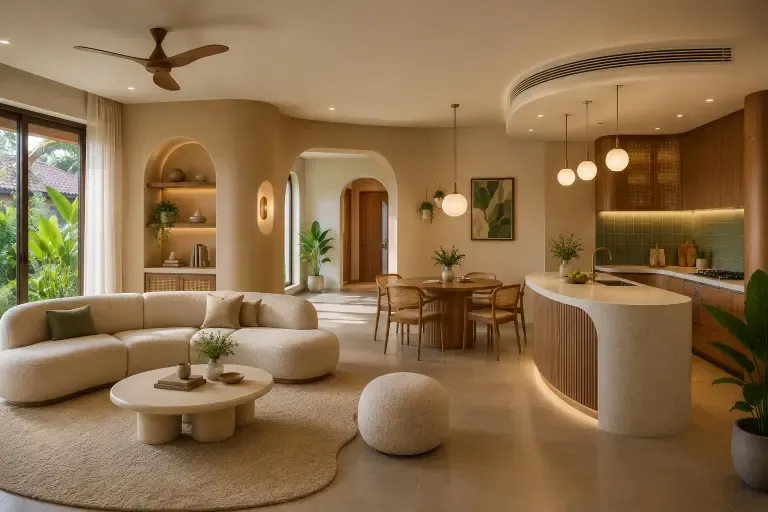
Walk into a newly finished home this year, and one of the first things you may notice is the growing use of softer, rounded forms. Furniture curves instead of following rigid lines, while doorways feature arches rather than standard rectangular openings. Curved interior design has evolved from a niche aesthetic into one of the most noticeable trends in residential design, and homeowners are embracing it for more than visual appeal.
Curved forms can create a softer, more welcoming feel throughout a space. This trend appears in living room layouts, kitchen islands, lighting, and even flooring, with options available for different budgets and climates. Here is a closer look at how curves are shaping modern homes and where they work best.
What Is Curved Interior Design?
At its core, curved interior design swaps sharp, boxy geometry for rounded forms. That might mean an arched doorway instead of a rectangular one, a curved sofa in place of a straight three-seater, a round dining table, an oval mirror, or a wall that flows instead of meeting the next one at a hard 90 degrees. It also shows up in smaller details, such as arched niches, scalloped furniture edges, fluted panelling on an otherwise flat surface.
None of this is about abandoning structure. It's about layering in organic shapes that soften the rigidity most modern homes default to. Done well, a curve or two can shift how a room reads without touching its overall balance, and even a small detail, like a rounded cabinet edge, can change how the whole space moves.
Why Are Curved Interiors Trending
The appeal of curved interiors comes partly from psychology. Sharp angles tend to create a subtle sense of tension in a room, while curved lines are often perceived as calmer and more approachable, largely because of how the brain processes shape. Top interior decorators in Cochin often leverage this connection to nature comes from the fact that rivers, hillsides, pebbles, and the human body itself are curved rather than angular, so rounded interiors can feel familiar in a way that boxy spaces do not.
Rounded furniture reduces sharp corners in busy households with children or pets, while curved walls can scatter sound more effectively than flat, parallel surfaces. In open-plan homes, a curve can define a zone without the visual weight of a full partition. After a long run of minimalist, hard-edged interiors, people are increasingly drawn to homes that feel softer and more comfortable.
Top Curved Interior Design Trends for Modern Homes
Rounded silhouettes are showing up in nearly every room of the modern home, and a few trends are leading that charge. Here's where curved interior design is showing up most often right now:
- Arched Entryways and Niches: Still one of the most visible expressions of curved interior design, arches are appearing in doorways, windows, and built-in shelving to soften the straight lines of standard floor plans.
- Curved Sofas and Kidney-Shaped Seating: Replacing traditional L-shaped sectionals, these pieces encourage conversation and soften what is often the room's largest and most structured piece of furniture.
- Round and Oval Dining Tables: These create a more balanced seating arrangement while making conversation and eye contact easier around the table.
- Globe Pendants, Mushroom Lamps, and Arched Floor Lamps: Lighting fixtures are an easy way to introduce softer shapes to a ceiling or corner without changing the architecture.
- Wavy or Circular Rugs: These help break up the straight lines of tiled or wooden flooring while adding an organic feel to the room.
- Curved Partition Walls: In open-plan homes, these can separate the kitchen from the living area while maintaining a connected feel.
Click here to learn, How to Plan a Modular Kitchen for a Kochi Apartment
Curved Kitchen Design Ideas for Modern Homes
Kitchens tend to be the most rigid room in any home, built around straight counters and right-angled islands, which is why curves stand out so much when they're introduced. Leading specialists in kitchen interior design in Kochi often use rounded profiles to soften these high-utility spaces. A few ideas worth considering for a modern kitchen:
- Rounded Island End Caps: These soften the areas where people naturally gather and lean while reducing sharp corners in high-traffic zones.
- Curved Breakfast Counters: Extending from a straight run of cabinetry, a curved counter creates an informal seating nook without requiring a separate table.
- Arched Niches Above the Stove or Sink: A simple architectural detail that breaks up flat tile and adds depth to the wall.
- Scalloped Backsplash Tiles: An easy way to introduce texture and softness without changing the overall material palette.
- Curved Cabinet Handles and Edges: Simple, cost-effective details that bring curved elements into the kitchen without requiring a full renovation.
Best Materials for Curved Interior Design
Not every material works well with curves, so choosing the right finish is essential to avoid cracking, warping, or looking worn over time. The best option also depends on where the curve is used, as a curved wall and a curved chair require very different materials. Some of the better options for Indian homes:
- Plywood and MDF with Veneer or Laminate: The obvious choice for curved furniture and panelling, since both can be cut and moulded easily without losing strength.
- Microcement and Lime Plaster: Well suited to curved walls and arches, as both can create smooth finishes with minimal visible joints or seams.
- Fluted Wood or PVC Panelling: Brings texture to rounded surfaces at a fraction of the cost of solid wood detailing.
- Rattan and Cane: Natural and breathable, making them particularly well suited to curved chairs and room dividers in warmer climates.
- Laterite Stone and Exposed Brick: Good choices for curved jalis and garden walls, pairing regional materials with a more contemporary form.
How Curved Interiors Work With Different Design Styles
Curves are flexible enough to fit almost any design you already have. In a minimalist or Japandi home, one curved sofa or round table against a plain wall becomes a natural focal point. In contemporary luxury interiors, curves can appear through sculptural furniture, fluted joinery, and archways finished in marble or brass.
In more traditional Indian homes, arched verandah openings and rounded jali screens bring the same idea through established craft techniques rather than new furniture. Whatever the style, proportion is what keeps the design from feeling overly themed. Curves work best as an accent against a mostly straight-lined structure, allowing rounded forms to add softness and visual interest without overwhelming the room.
Curved Interior Design for Kerala Homes
Kerala's relationship with curved, open architecture goes back much further than this trend, from traditional nalukettu homes to the sloped roofs and deep verandahs built specifically for the region's heat and heavy rainfall. Many budget interior designers in Kerala point out that bringing curves into a space often means updating existing structural elements rather than starting completely from scratch. An arched opening between the living and dining areas, for instance, can genuinely improve cross-ventilation, which matters in this kind of humidity.
A curved courtyard or semi-open nook can echo the traditional nadumuttam layout while still fitting a smaller, more modern plot. Laterite stone arches, teak detailing, and curved cane partitions keep the material palette local while allowing the shapes to feel contemporary. In coastal or high-humidity areas, it is always best to specify curved features with a moisture-resistant finish to ensure the design holds up well through the monsoon.
Common Mistakes to Avoid With Curved Interior Design
Curved interior design can create a refined and inviting look when used thoughtfully, but a few common mistakes can make a space feel cluttered rather than balanced. Most issues come from overusing the trend or overlooking how the room will function. Here are a few key points to consider before introducing curves into your home:
- Overusing Curves: Too many rounded elements in one room can make the design feel repetitive rather than thoughtfully balanced.
- Ignoring Proportion: A large curved sofa in a small room can take up more floor space than a straight one, making the room feel more compact rather than spacious.
- Choosing the Wrong Material: A real risk in Kerala specifically, since some finishes used for curved walls simply don't withstand monsoon humidity.
- Skipping Clearance Around Furniture: Curved pieces placed too close together can restrict movement, which reduces the practical benefits of the design.
Is Curved Interior Design Right for Your Home?
Curved design suits homes that want to feel warmer and less rigid without requiring a full renovation. It can easily scale from a single accent chair to a complete architectural overhaul. It works particularly well in open-plan layouts, in family homes with young children, and for anyone who's simply drawn to a softer look. It's better to be a bit more careful in very small spaces or on a tighter budget, since curved furniture and custom arches usually cost more than their straight-lined equivalents. In most cases, the smarter move is to start small, with one or two curved elements, and build from there once you know how it feels to live with.
If you're wondering how curves could work in your own home, Lemon Interiors designs and builds curved interior concepts for modern homes, from arched doorways and curved kitchen islands to full space planning that balances style with practicality. Our team can help you figure out exactly where curves make sense for your layout, climate, and budget. Contact Lemon Interiors to discuss your ideas and start planning your space.