
Biophilic Kids Room Ideas for Kerala Homes
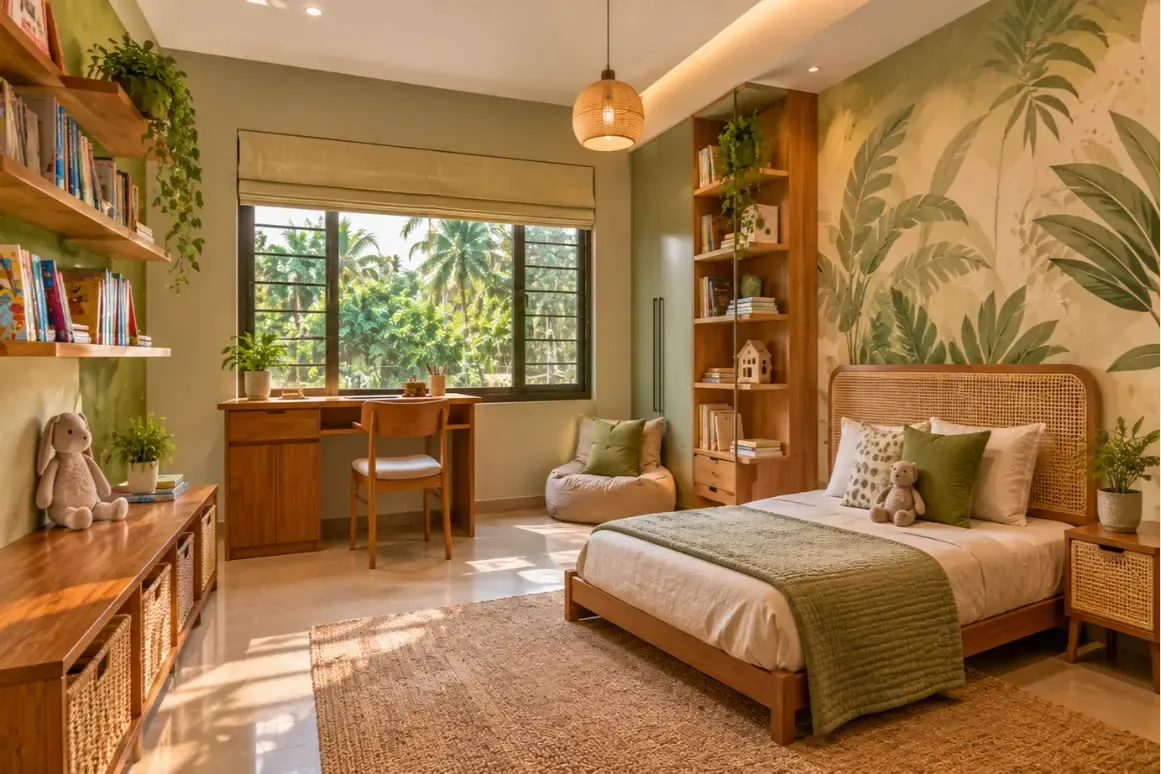
A child's room can bring nature indoors without turning into a themed space. Biophilic design uses natural light, ventilation, colours, textures, plants, and materials to create a connection with nature.
For Kerala homes, these ideas can work well with available daylight, greenery, and natural materials. The right approach keeps the room safe, easy to maintain, and suitable for a child while making practical use of limited space in Kochi apartments.
When planning a child's bedroom, choosing experienced interior designers in Kochi can help create a space that balances natural elements, practical storage, comfort, and safety.
What Is Biophilic Design for Kids' Rooms?
Biophilic design brings parts of the natural world indoors. In a kids' room, that might be morning light reaching the study desk, a jute rug underfoot, clay or soft green walls, or a reading corner by a window that looks onto a coconut palm. These thoughtful details can make a difference when planning kids room interior design in Kochi.
A room full of plants or timber furniture is not required. One leaf print wall, a cane basket for toys, and a calm palette often do the job, and they are easy to keep clean.
Before you buy a plant or choose a wall colour, spend a week noticing how your child uses the room. Where does the school bag land after classes? Which corner turns into the play area on a rainy afternoon? These habits decide where the desk, shelves, and rug belong. Natural elements come next, and decoration comes last.
Why Biophilic Design Suits Kerala Homes
Kerala already gives you most of what biophilic design asks for. Daylight is strong, breezes move through open windows, and a coconut palm often stands right outside the bedroom. Use these well, and plan for monsoon damp.
For homeowners exploring interior designers in Kerala, climate-conscious planning is particularly important when selecting materials and finishes for children's bedrooms.
- Clear windows: Don't place tall wardrobes and bookshelves against the window wall. Daylight and the evening breeze both come through that opening, and a wardrobe next to that opening blocks both.
- Natural textures: A cane headboard, a jute rug, a teak study table, and walls in clay or sand tones echo what your child already sees outside. Two or three of these are enough.
- Outside views: Turn the desk or bed to face the window. A balcony planter, a mango tree, or a neighbour’s garden then becomes part of the room.
- Practical finishes: Choose surfaces made for damp conditions, such as moisture-rated boards and washable paint. Monsoon lasts for months, and a finish that lifts at the edges after one season is rarely worth the saving.
Read more about Living Room Interior Ideas for Apartments in Kakkanad and the Infopark Area
How to Use Natural Light, Colours and Materials
Natural light, calm colours, and practical materials form the base of a biophilic kids' room. Settle the daylight first, then choose colours and furniture finishes around it. That order keeps the room natural in feel without adding features you will have to maintain.
- Wall colours: Greens, beige, clay, sand, and muted blue can work well depending on the room’s natural light. Choose warmer or cooler shades based on how the colour looks in the actual space.
- Wood and textures: Timber or a wood finish suits wardrobes, shelves, and desks. One woven detail, such as a cane panel on a wardrobe door, is usually enough.
- Boards and laminates: Pick them by position. A wardrobe near a bathroom wall faces more moisture than a study table in the centre of the room.
- Hardware: Stainless steel or coated hinges and handles resist rust better in damp weather, though the exact grade is worth confirming with your supplier.
- Termite protection: Consider treated timber or termite-resistant wood-based boards, especially for furniture in areas exposed to moisture.
Kid Safe Plants, Lighting and Nature Inspired Details
Plants offer a direct connection with nature, but a child’s room needs careful planning around safety and upkeep. Where plants are not practical, lighting, murals, wallpaper, and natural textures can create a similar feel without the risk.
- Plants: Choose child-safe species and keep pots out of reach. Avoid loose soil, pebbles, or other small pieces that could be swallowed.
- Lighting: Daylight should carry the room until late afternoon. After that, a focused desk lamp for homework and a softer warm bulb by the bed or reading corner are enough.
- Wall treatments: A single wall with a leaf, forest, or sky mural is easier to live with than a busy theme across every surface. It can also be updated more easily as your child’s interests and preferences change.
- Textures: Cane, rattan, timber, and linen add a natural feel without filling the floor. A cane headboard or a linen curtain, for example, brings in texture and keeps the play area open.
- Play area safety: Check the play corner for loose cords, wobbly decor, sharp edges, and breakable items. Anything a child can pull, tip over, or snap should be moved out of reach.
Reading Corners and Nature-Inspired Play Areas
A reading or play corner makes the biophilic idea part of your child’s daily routine. Place it where daylight is comfortable, and keep it clear of the main walking path. Low furniture and soft pieces that can be moved let the corner change as your child grows.
- A low bookshelf and a small seat beside the window work well, as long as a curtain or blind can cut the glare and the afternoon heat.
- Swap a plastic stool for a timber bench or a cane stool, and put a cotton cover on the cushion. The corner feels natural, and nothing extra is added.
- Keep fixed furniture to a minimum. Your child needs enough open floor space for blocks, picture books, puzzles, and other activities.
- A washable rug and two or three floor cushions can be moved or replaced as your child grows.
Biophilic Ideas for Small Kids' Rooms in Kochi Flats
A small kids' room stays biophilic when the floor is kept open, and nature comes in lightly. Start with compact furniture and wall storage. Once the layout works, add one or two natural touches. In a Kochi flat, a single child-safe plant on a high shelf does more than five spread around the room.
- A tall wall unit with a loft section holds more than low cupboards. The floor stays free for play.
- A fold-down wall desk opens when homework starts. Once it closes flat, that same stretch of wall becomes space for toys and games again.
- A bed with drawers underneath can take the place of a separate chest. Spare bedding, school uniforms and towels stay out of sight.
- A timber peg rail fixed at your child’s height keeps school bags off the floor. It brings in a natural material and uses no floor area at all.
- Keep natural touches to one or two. A single child-safe plant on a high shelf is plenty.
Cost of Biophilic Kids Room Interiors in Kochi
Published Indian estimates for complete kids' room interiors run from about ₹1.2 lakh to ₹3 lakh, depending on scope and finish. Room size, custom furniture, materials, lighting, storage, and wall treatments set the price. Plants and décor usually make up a smaller part of the budget. Use that as a planning range only, because it is not a Kochi quotation and we would want to see the room before giving you a figure.
- A loft unit with a built-in desk costs more than a ready-made cupboard.
- Check what each quotation includes, such as furniture, lighting and installation, before comparing totals.
How Lemon Interiors Designs Kids Rooms in Kochi
At Lemon Interiors, we plan kids rooms around your child’s current needs and how they may change over time. Our team handles layout, custom furniture, materials, lighting, and finishes as one coordinated process.
We also manage design, manufacturing, and installation, with materials selected for daily use and Kerala’s climate. If you are planning a biophilic kids room in Kochi, we can help you balance natural elements with storage, safety, and flexibility.