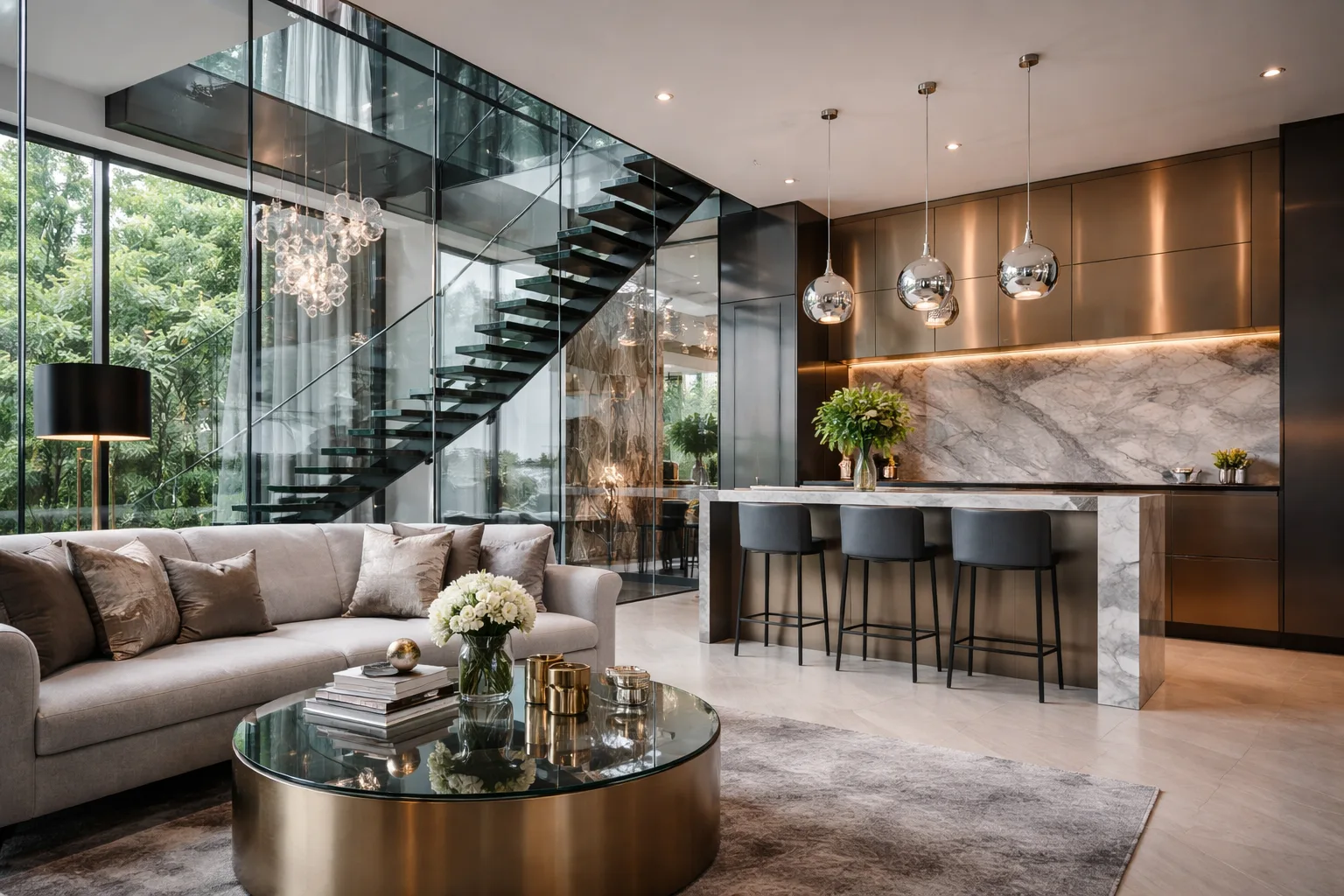
The field of interior design continues to change as new materials emerge, which designers use to create different atmospheres for indoor spaces. Among the many available options, glass and metal emerge as permanent selections which combine their practical uses with visual attractiveness. Whether you’re designing a sleek modern apartment, a cozy home office, or a luxurious living room, these materials can transform ordinary interiors into extraordinary ones. The secret lies in knowing how to use them effectively, balancing their strengths while steering clear of typical usage mistakes.
In this blog, we will examine the reasons why glass and metal serve as effective design elements for interior design, the advantages these materials provide to contemporary spaces, the most common materials used in interior design and the essential mistakes that need to be avoided for maintaining stylish, functional and welcoming interior spaces.
Why Choose Glass and Metal in Interior Design
Glass and metal materials have become essential design elements which remain popular through various fashion trends. Here’s why they are worth considering:
- Versatility
Glass and metal can match different architectural styles, which include industrial lofts and minimalist homes. and traditional spaces that incorporate modern elements.
- Timeless Appeal
Glass and metal create an enduring, elegant appearance which maintains its charm throughout time. The materials can be used in both modern and traditional design styles.
- Functionality Meets Aesthetics
Glass and metal not only look attractive but also provide long-lasting durability, practical performance and simple upkeep. They function as both decorative elements and structural components.
- Light And Space Enhancement
Glass provides a special capability to expand spaces while increasing their brightness. Metal creates architectural strength while establishing design boundaries.
The selection of glass and metal products goes beyond current fashion trends because they create spaces which maintain their modern appearance while providing practical design solutions.
Benefits of Glass and Metal in Modern Interiors
When used thoughtfully, glass and metal create interior design possibilities which only a few materials can match. The following are some of its advantages:
- Creates A Sense Of Openness
Glass partitions, doors and walls permit natural light to enter spaces, reducing artificial lighting requirements while creating an open atmosphere.
- Adds Sleek Elegance
Metal accents provide a modern, polished appearance when used in furniture, fixtures and decorative elements. Stainless steel, brass and aluminum materials create an elegant appearance.
- Durability And Longevity
Glass and metal both exhibit high strength and durability. While metal maintains its integrity against damage, tempered glass shows resistance to impacts.
- Easy Maintenance
Glass and metal surfaces provide better cleaning solutions for both busy homes and commercial spaces than wood and fabric materials.
- Design Flexibility
Glass can be frosted, tinted, or etched to create both privacy and decorative effects. Metal surfaces can be transformed through brushing, polishing and painting to achieve various design styles.
- Eco-Friendly Options
Recycled glass and metal materials are increasingly available, which creates sustainable options for designers who prioritize environmental protection.
The combination of glass and metal materials establishes an equilibrium between transparent and solid elements while maintaining both delicate and robust characteristics needed to create functional yet aesthetically pleasing interior spaces.
Popular Glass and Metal Materials for Interiors
Not all glass and metal materials have the same properties. It is essential to choose the appropriate material for your project's needs. The following are some of the popular options:
Glass
- Tempered Glass - Strong and safer than standard glass, making it suitable for doors, partitions and tabletops.
- Frosted Glass - Provides privacy but also enables light to enter spaces, an ideal choice for bathroom and office environments.
- Tinted Glass - Adds colour while minimizing reflection, making it ideal for window and decorative panel solutions.
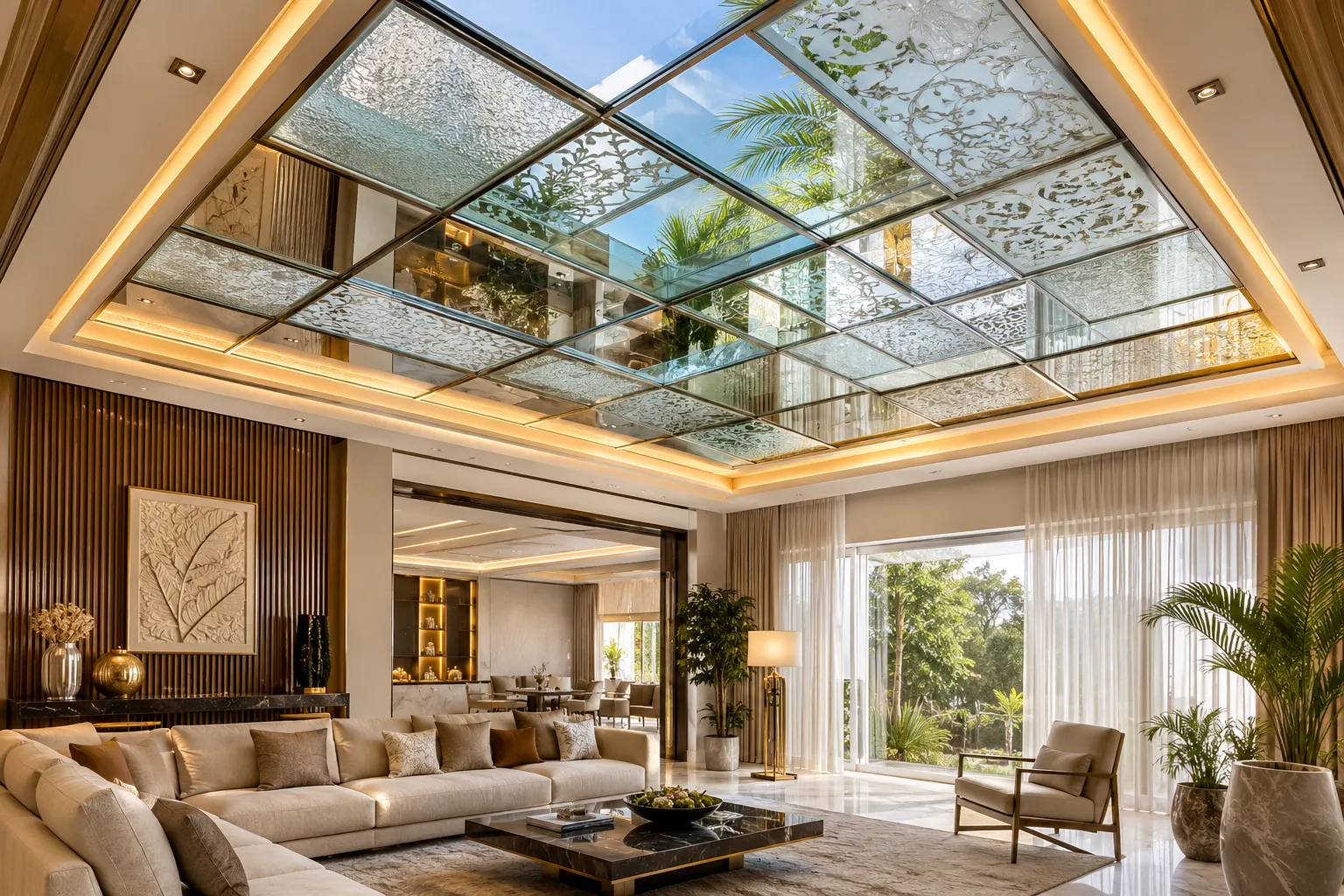
- Etched Glass - Provides artistic designs through its various patterns and textures, which enable users to create distinct interior design styles.
- Mirrored Glass - Improves light distribution through its ability to create spatial illusions, which designers use for both wardrobe design and decorative wall applications.
Metal
- Stainless Steel - Durable, corrosion-resistant, and sleek, which makes it suitable for use in kitchens, bathrooms and contemporary furniture design.
- Brass - Provides both warmth and elegance, thus commonly used in fixtures, handles and decorative accents.
- Aluminum - Lightweight as well as versatile, used commonly for window frames, furniture and shelving systems.
- Iron - Displays a strong and bold appearance, which designers use to create railings, staircases and industrial-style furniture.
- Copper - Has a rustic charm and natural patina, ideal for both accent pieces and lighting fixtures.
The combination of these materials enables you to design spaces that achieve both practical use and exceptional visual appeal.
Common Mistakes to Avoid
Though glass and metal are powerful design materials, they can easily overwhelm a space if not used correctly. The following are some mistakes that you need to watch out for:
- Overusing Metal
Excessive use of metal can make a space feel cold and sterile; it needs to be balanced with softer materials like wood, fabric, or natural stone.
- Ignoring Safety With Glass
Using untreated or thin glass in high-traffic areas creates dangerous situations. Always opt for tempered or laminated glass that provides both longevity and protective features.
- Poor Maintenance Planning
Glass surfaces show fingerprints and smudges, while metal surfaces can develop tarnish and scratches. A regular cleaning schedule needs to be established.
- Clashing Finishes
The combination of multiple metal finishes, such as chrome, brass and copper, without a defined design strategy, creates a chaotic appearance in the interior spaces. Stick to one or two complementary finishes.
- Neglecting Acoustics
Glass walls and partitions create increased sound levels; consider acoustic treatments or combine glass with sound-absorbing materials.
- Ignoring Context
Not all design styles can use glass and metal materials. For instance, an excessive use of stainless steel in a rustic farmhouse interior design will create an unattractive appearance. Your design should always follow the main theme of your project.
Avoiding these mistakes and the proper execution of glass and metal materials in your design will bring aesthetic value to your interior spaces.
Timeless Interiors Through Glass and Metal
Glass and metal are design materials which transform interior spaces into areas that showcase brightness, strength and graceful beauty. The materials create an open atmosphere which enhances both the structural integrity and the stylish appearance of contemporary residential and commercial spaces. The combination of these materials enables designers to create unlimited design options which serve both artistic and practical purposes. This is where design leaders like Lemon Interiors showcase their expertise through their ability to use these traditional materials in combination with imaginative design to create spaces that serve practical needs while maintaining welcoming atmospheres.
Lemon Interiors has consistently demonstrated how glass and metal can be applied with creativity and precision to achieve timeless results. Our projects demonstrate how transparency and solidity create spaces that provide both welcoming and refined interior experiences. Through our material choices and sustainable design methods, Lemon Interiors establishes contemporary design standards for our projects. The designers show how glass and metal become design elements which turn common areas into exceptional spaces through our deliberate use. The selection of Lemon Interiors as experts guarantees that the materials will function as essential components which create enduring aesthetic value throughout the interior spaces.