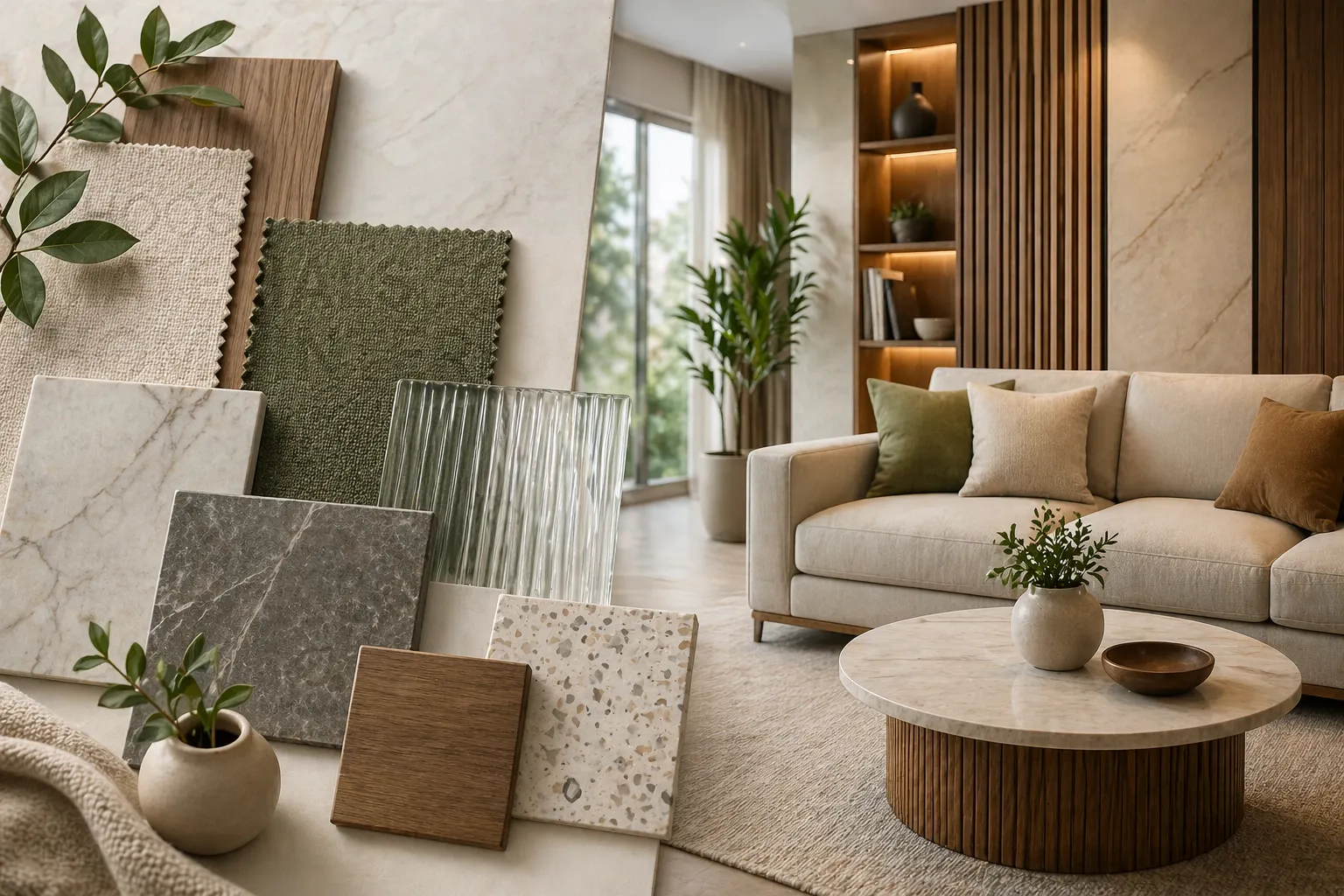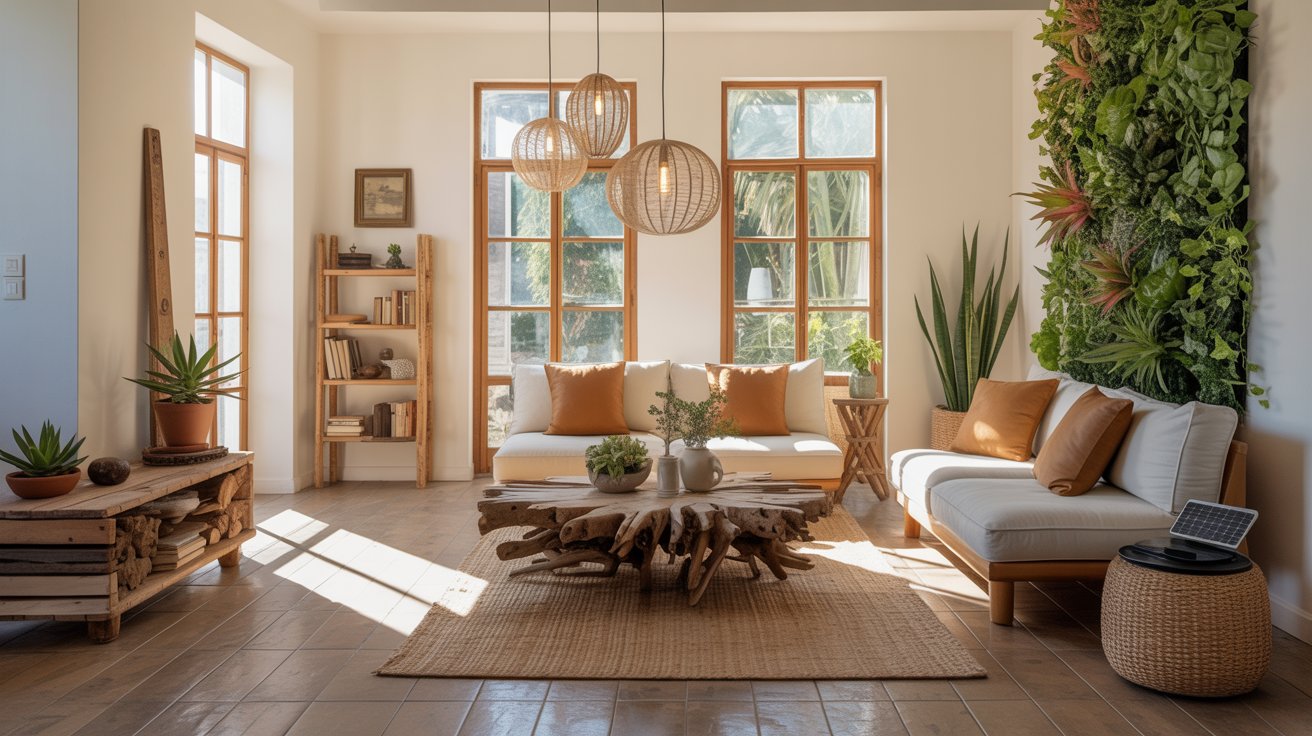
So, are you planning for a new home or renovating your existing home? Well, a sustainable interior design should be what pops up when you search for the best interior design ideas. In fact, a sustainable design is what gives you a stylish, modern home that feels fresh, healthy and comfortable.
This guide will help you check out a few sustainable interior design ideas that really matter.
What Is Sustainable Interior Design?
A sustainable interior design refers to creating beautiful and functional spaces without any negative impact on the environment, and with a focus on improving indoor health.
Simply put, a sustainable interior design focuses on the following elements –
- Using eco‑friendly, low‑toxicity materials (like bamboo, reclaimed wood, low‑VOC paints)
- Reducing waste through recycling, upcycling and timeless design
- Saving energy and water with smart fixtures, lighting and appliances
- Designing for durability and flexibility, so things last longer and don’t get replaced often
Why Sustainable Interior Design Matters for Modern Homes?
The modern homes today are compact, sealed and dependent on artificial lighting and air conditioning. It can indeed have a serious impact on the environment.
Here are a few primary reasons why a sustainable interior design matters in modern homes –
- Healthy indoor air – The sustainable design focuses on good indoor air quality. Stannard paints and other accessories can irritate eyes, throat and lungs. Sustainable design avoids these paints and finishes.
- Lower energy bills – The sustainable design uses energy‑efficient lighting, appliances and good natural ventilation.
- Less waste and more value - Durable materials and timeless design mean you’re not redoing your interiors every few years. That saves you more money
- Future proofing of your home - Sustainability is not a passing trend. Newer regulations, resale value and buyer preferences are increasingly favouring eco‑friendly homes.
Key Principles of Sustainable Interior Design?
Sustainable interior design is built on a few key principles. Understanding these principles will help you get the most out of your design.
- Use of natural and recycled materials – The sustainable design prioritizes wood, bamboo, jute, cane, stone and other organic materials. Most of the time, these materials are locally sourced.
- Design created for durability – Choose furniture and other materials that are designed for high-end durability for daily use. Long‑lasting materials like reclaimed wood, high‑quality cabinetry and robust textiles reduce the need for frequent replacement.
- Maximize natural light and ventilation – The sustainable design places importance on large windows, cross ventilation and light colored walls.
- Reduce, reuse, and recycle – these are the primary principles of sustainable design. Instead of buying new, you can focus on recycling old wooden furniture into metal frames and glass.
Sustainable Materials for Modern Home Interiors
The right choice of materials lies at the heart of a really good sustainable design.
Here are a few materials that a sustainable design primarily focuses on –
- Bamboo – It grows faster and can regenerate without the need to replant. That is, it is one of the most widely used materials in a sustainable design.
- Reclaimed wood – The wood recovered from old buildings and furniture is used for sustainable interior design. This helps reduce the demand for freshly cut timber.
- Cork – The material works beautifully for flooring, wall coverings, and even pin‑up panels. It also offers robust sound and thermal insulation.
- Natural fibres - Jute, cotton, linen, hemp, and wool are excellent for rugs, curtains, cushions, and upholstery. They are biodegradable and are best suited for a sustainable interior design.
- Recycled glass and metals - Recycled glass can be used in tiles, countertops, and décor accents.
- Low‑VOC paints and finishes - These reduce toxic fumes and are now available in a wide range of colours and finishes, making it easy to keep walls stylish and safe.
Sustainable Furniture Choices for Modern Interiors
Furniture should be the prime factor that makes or breaks your sustainable design.
Here are a few guidelines that should be helpful for you –
- Choose quality over quantity - A few well‑made, timeless pieces are better than many cheap, disposable items.
- Choose certified wood - Look for FSC‑certified timber or ask your designer about responsibly sourced or reclaimed wood.
- Look for natural and locally sourced materials - Cane, rattan, bamboo,o and solid wood furniture paired with organic cotton or linen upholstery are best for a modern and organic look.
- Pick modular and multi‑functional designs - Sofa‑cum‑beds, storage ottomans, foldable desks, and modular shelving systems can work best in small spaces.
- Consider upcycled or refurbished pieces - Repainting, reupholstering, or refinishing existing furniture can save money and add unique character.
Budget-Friendly Sustainable Interior Design Tips
A sustainable design should not necessarily be expensive. You can still make a huge impact with the budget options.
- Use LED lighting - Replace old bulbs with energy‑efficient LEDs. They help in saving on energy bills.
- Begin with walls and floors - Low‑VOC paint, natural fibre curtains, jute rugs, and cotton bed linen instantly make a room healthier.
- Use creative upcycling - You can convert old ladders into shelves, or trunks into coffee tables.
- Bring indoor plants – You can use indoor plants like money plant, or peace lily, for purifying the indoor air.
Common Mistakes to Avoid in Sustainable Interior Design
Even when you have the good intentions of employing sustainable design, there are possibilities of committing mistakes.
- Don’t fall for fake promotions – Everything marked as eco-friendly need not be sustainable in practice. Check for the material details, certifications, and durability.
- Never ignore indoor air quality - Using “natural‑looking” furniture but finishing it with high‑VOC paints can be counter-productive.
- Avoid overdecorating – Sustainability works best with minimalism. Avoid too many décor items.
- Never ignore maintenance - Some materials look great but require specialized care. Focus on proper maintenance of such items.
Future Trends in Sustainable Interior Design
Well, what new trends do we expect in sustainable interior design?
- Circular design and recyclability - Designs are moving towards materials and products that can be disassembled, repaired, reused, or recycled.d
- Energy-efficient homes – People are moving towards automated lighting, climate control, motion sensors, and energy‑monitoring systems.
- Bio‑based and innovative materials - Beyond bamboo and cork, designers are exploring materials like mushroom mycelium, hemp composites, and advanced recycled products for panels, insulation,n and décor.
Give a new Look to your Home with sustainable interior design
Sustainable interior design has become extremely popular. However, it need not mean compromising on style. You can choose the right materials, follow the right principles, and design smarter.
If you find it difficult to come up with the right ideas for a sustainable design for your home, partnering with a capable partner would make it a wise choice. Lemon Interiors is one of the leading interior designers in Kochi and across Kerala. Our team can help you blend sustainability with style so that every corner of your home looks beautiful, functions well, and feels good to live in.
Embrace a sustainable interior design and show your respect for the environment!