
Pendant Lights vs Recessed Lights: Which Is Better?
Lighting is often the most underrated element of interior design. We spend weeks obsessing over the perfect wall colour or the texture of a velvet sofa, only to put a few standard bulbs on the ceiling without much thought. But at Lemon Interiors, we have seen how the right light can either elevate a room into a sanctuary or make a high-end kitchen feel uninviting.
When it comes to modern ceiling lighting, the two heavyweights are pendant lights and recessed lights (often called pot lights or downlights). One hangs boldly as a centerpiece, while the other is hidden within the architecture to provide a smooth glow. Neither is better on its own, but choosing the wrong one for your space can affect the entire balance of your home.
What Are Pendant Lights?
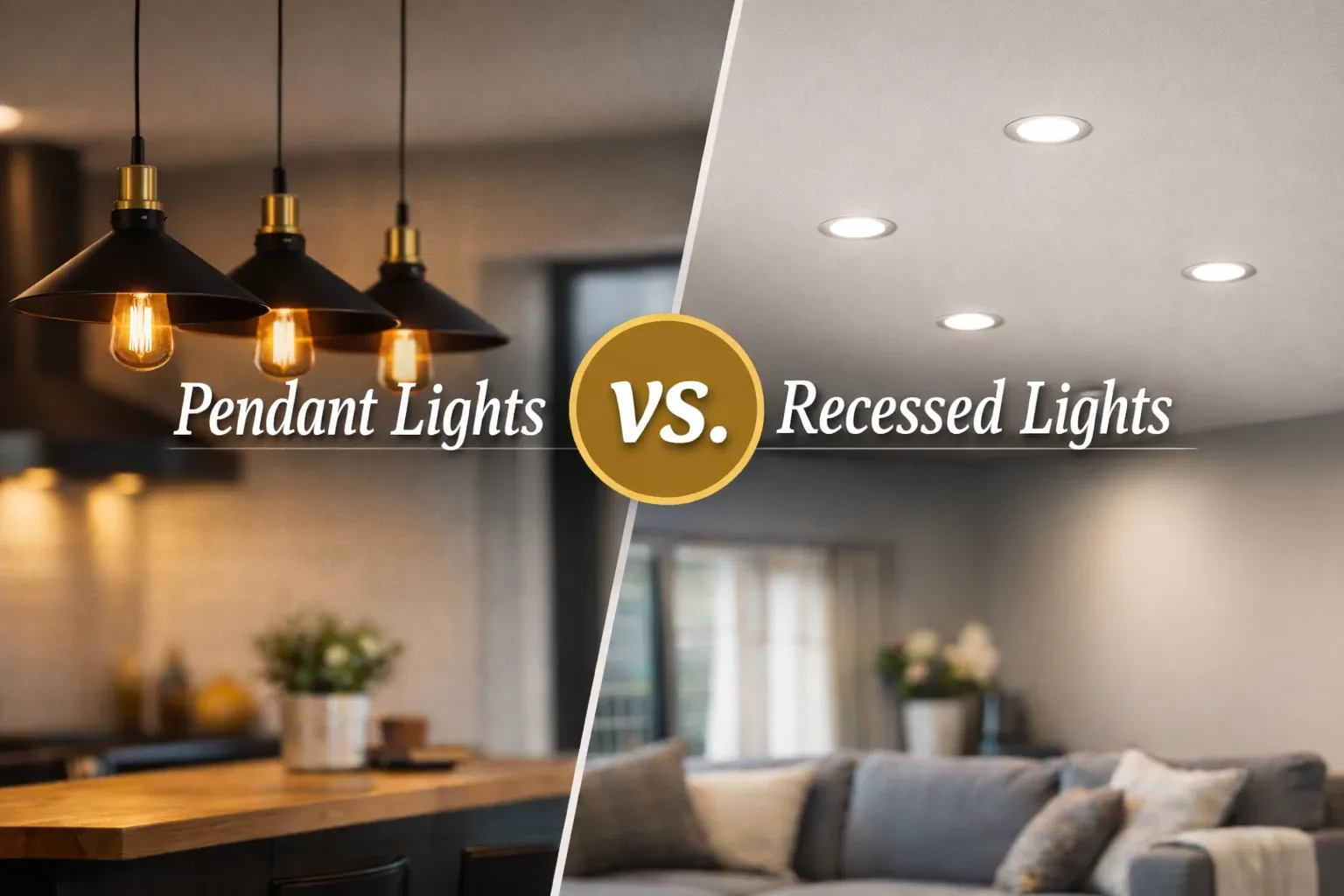
Think of a pendant light as the main light of the room. It is a single light that hangs from the ceiling on a cord, chain, or rod. Because it hangs lower, it is meant to be seen. Pendant lights come in styles such as plain glass, industrial bulbs, or large woven shades, which can make a room feel warm. They have two main jobs. They give light where you need it and make the room look nice. For example, if you are chopping vegetables on a kitchen island, a row of pendant lights shines right on your cutting board. They also fill space in rooms with high ceilings, adding texture that a flat ceiling light cannot.
What Are Recessed Lights?
Recessed lights are quiet but useful in room design. They are installed directly into a hole in the ceiling, so they sit flat and don’t hang down. You see the light they give, but not the fixture itself. These lights are great for lighting a whole room. They work especially well on low ceilings where hanging lights could get in the way. Recessed lights are also perfect for wall washing, which means placing them near a wall to show textures, like a stone wall, or to make a narrow hallway look bigger and more open.
Design & Aesthetic Impact
Choosing these lights depends on how busy you want the room to feel. Pendant lights are statement makers. They define a zone. If you have an open-concept living and dining area, a set of pendants over the dining table serves as an invisible wall, indicating where the dining area begins. They add character and can bridge the gap between different design styles. For example, a sleek matte black pendant can instantly modernize a traditional wooden table.
Recessed lights, on the other hand, are about minimalism. They disappear into the background, allowing your furniture and artwork to stand out. They provide light that feels natural and even. In a modern, minimalist home, cluttered ceilings can feel claustrophobic. Recessed lights solve this by keeping the room sharp and clean.
How to Make Lighting Functional
Good lighting is about how it works. The right lights make life safer and easier. Picking the right mix of lights makes your home both functional and beautiful. Here’s how you use different types of lighting to make each room work better and look great.
Pendants for Focused Light
Pendants are excellent for localized lighting. Because they hang closer to the surface, they illuminate, the light is more concentrated, making them ideal for:
- Kitchen Islands: Three pendants spaced evenly provide shadow-free light for cooking.
- Bedside Lighting: Hanging a pendant over a nightstand clears up space on the table for books and water.
- Reading Nooks: A low-hanging pendant creates a more comfortable atmosphere.
Recessed Lights for Big Areas
Recessed lights are far more flexible for covering large areas. You wouldn't put twelve pendants in a living room. That would make the space look like a lighting showroom. However, you can install 12 recessed lights in a living room to ensure every corner is well-lit.
- Water Resistance: Recessed lights can be used in showers or over bathtubs because they are made for wet areas.
- No Dusting: Unlike pendants, which have shades and cords that attract dust, recessed lights require almost no maintenance once installed.
How to Choose the Best Lights for Your Home
Deciding which direction to go isn't about picking one or the other. It’s about how they work together. We call this lighting layers. Here’s how you can do it:
- Check Your Ceiling Height: If your ceilings are below 8 feet, pendants can make the room feel cramped and may even interfere with your line of sight. Choose recessed lighting for the main areas and perhaps a very slim pendant in a corner.
- Identify the Room’s Purpose: In a home theater or a hallway, you want the light to be subtle, so recessed lights are best. In a foyer or over a dining nook, you want a focal point, so choose a pendant.
- Watch for Glare: Recessed lights can sometimes make uneven spots on the ceiling and harsh shadows on faces. Pendants with shades diffuse light, making it softer and more pleasant for people in social areas.
- Mix and Match: The most sophisticated homes use both. Use recessed lights along the kitchen perimeter for general lighting, then install two or three stunning pendants over the kitchen island for extra lighting.
Finding the Right Lighting for Your Space
Choosing between pendant and recessed lighting isn’t a compromise. It’s about understanding why you need the light. Recessed lighting provides the foundation, giving you the light you need to see clearly. Pendant lighting, on the other hand, provides the soul, adding style and showing your personal taste.
At Lemon Interiors, we believe good lighting can completely change the feel of a space. Our goal is to create interiors that are both beautiful and practical for everyday living. With thoughtful design and attention to detail, we help turn houses into warm and welcoming homes. No matter the lighting you choose, the key is to choose it on purpose. If you’re planning to transform your space, contact us to create the perfect lighting design for your home.